
UX Research for Startups: How to Validate Product Direction Before You Build
Startup teams often skip UX research because it feels slow. The real risk is not research itself, but making product decisions without enough evidence. Lightweight research helps validate direction before a concept or MVP becomes expensive.
The goal is not to turn every early-stage team into a research lab. Most startups do not need a six-week discovery phase before they make their next move.
They need enough evidence to stop guessing in the most expensive places.
Good UX research helps a team understand the problem, the user, and the decision they are about to make. At the earliest stage, that decision is often not "which feature should we build?" It is more basic: is this direction clear enough to become a concept, an MVP, or a product at all?
Why Startups Skip UX Research in the First Place
Founders usually do not skip research because they think users are irrelevant. They skip it because the tradeoff looks obvious in the moment.
There is pressure to show progress. There is a pitch deck to finish, a demo to prepare, a product idea that already feels clear inside the team's head. Research starts to look like a delay, while design or development looks like movement.
That is where early teams get trapped.
Skipping research can make the next week feel faster, but it often makes the next month more expensive. The team starts building around assumptions that were never tested. The first version looks more real, but the product direction is still soft underneath.
A useful research pass should help the team understand:
- who the product is really for
- what problem the user already recognizes
- what part of the workflow creates the most friction
- what promise the product needs to make
- what should be validated before design or development hardens the idea
This is especially important before a startup turns an idea into a product concept or MVP scope.
What UX Research Should Clarify Before a Concept or MVP
UX research is often described as a way to understand users. That is true, but for startups it is not specific enough.
At an early stage, research should reduce product uncertainty. It should help founders make sharper decisions before they commit to screens, flows, features, or engineering time.
The output does not need to be a heavy report. In many cases, the value is simpler: a clearer problem, a sharper user story, and a better sense of what the first product experience needs to prove.
Before shaping a concept or MVP, research should clarify:
- whether the problem is real enough to design around
- whether the target user understands the pain in the same way the team does
- which parts of the product story are still vague
- which assumptions need to be tested visually
- which features can wait until the direction is clearer
This is where research connects directly to concept work. A strong product concept before building an MVP should not be just a polished version of the founder's first idea; it should be a visual hypothesis shaped by actual user and market signals.
Two Research Traps That Slow Startup Teams Down
The problem is not simply "too little research" or "too much research." Both can hurt an early-stage product.
Most startup research problems fall into two traps.
Surface-Level Research
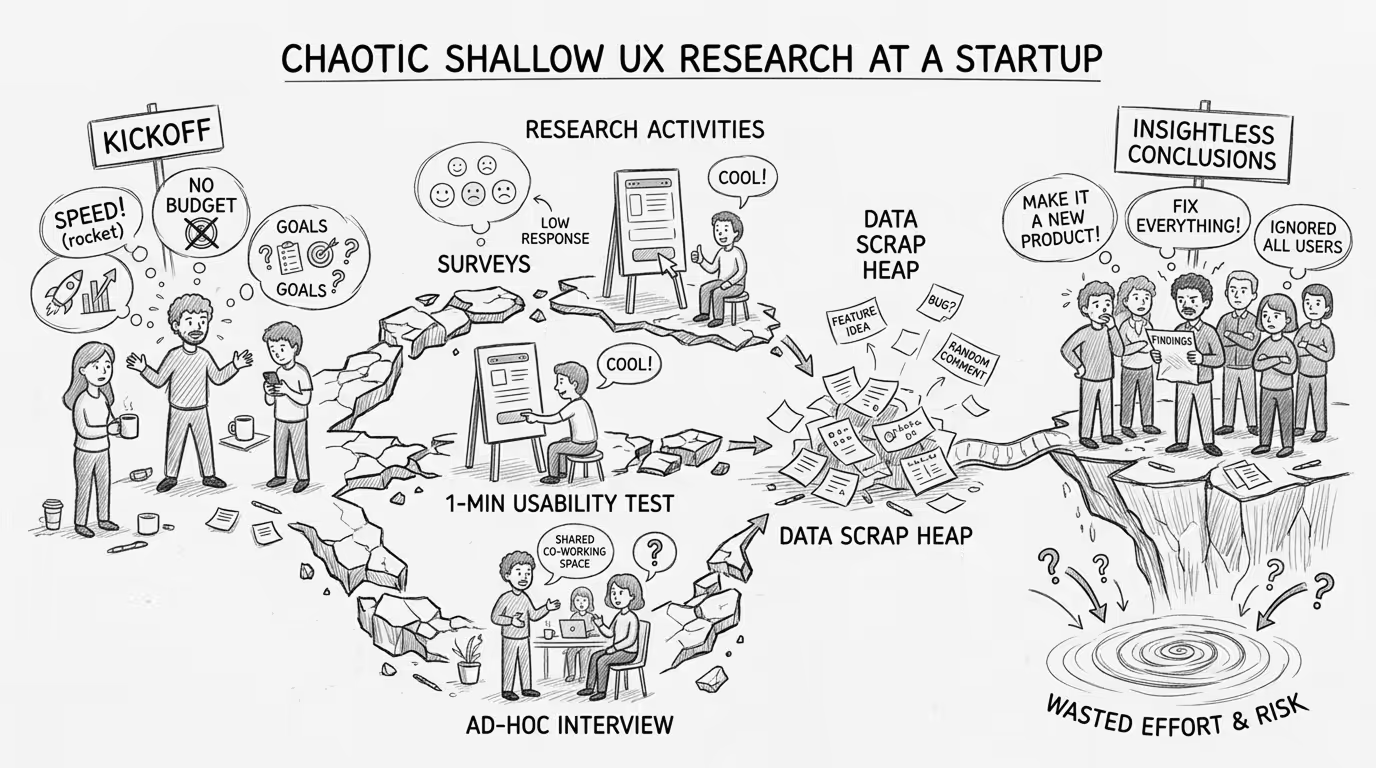
Surface-level research happens when the team wants the confidence of research without changing how decisions are made.
It often looks productive from the outside. Someone checks competitors. Someone scans a few reviews. Someone asks a small group of familiar people what they think. The team collects enough input to feel informed, but not enough to challenge the product direction.
That kind of research can be useful as a starting point, but it should not be treated as validation.
The risk is false confidence. The team believes it has listened to the market, while the core assumptions remain mostly untouched. Then those assumptions get baked into the concept, pitch, or MVP.
Research That Never Reaches Product Decisions
The opposite trap is isolated research.
This happens when research becomes a separate track that produces findings, but those findings do not meaningfully shape the product. The research may be thoughtful, but it arrives too late, stays too abstract, or never translates into concrete decisions about the experience.
For startups, that gap is dangerous. A team cannot afford research that lives in a document while design and development move in another direction.
Research should influence what the team does next:
- what concept to shape
- what flow to simplify
- what promise to test
- what MVP scope to avoid
- what user problem should become the center of the product story
If research does not change the next product decision, it is probably not close enough to the work.
How Lightweight Research Supports Concept-Stage Validation
Concept-stage validation is not about proving everything. It is about finding out whether the product direction is coherent enough to move forward.
Lightweight UX research helps because it keeps the team close to reality without forcing a long discovery process.
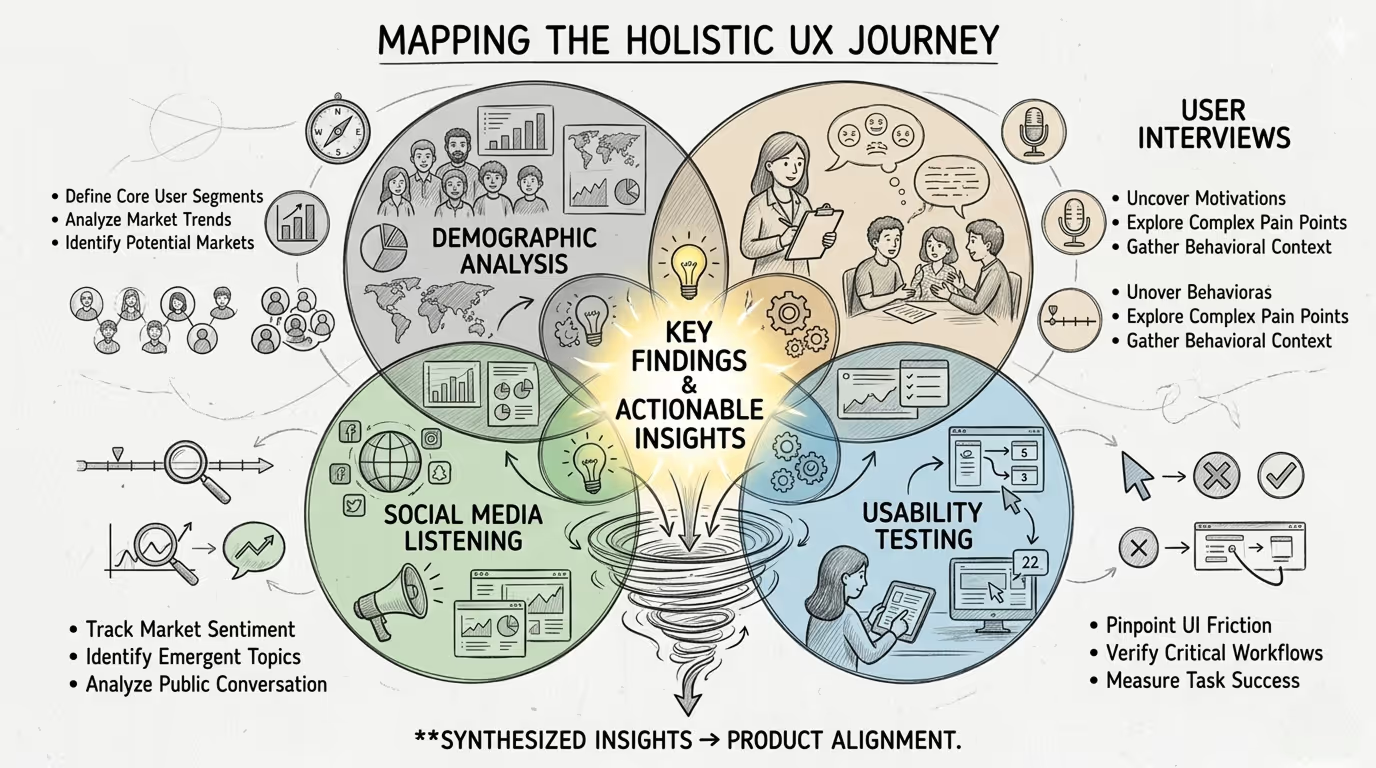
The team can look at user behavior, competitor patterns, support conversations, founder interviews, early customer calls, market language, and product expectations. Then those signals can shape the concept before the team spends more time on detailed design or code.
This kind of research is useful when the team needs to:
- turn a rough idea into a clearer product direction
- understand what users need to see before they trust the product
- decide which workflow matters most
- prepare a concept for investors or stakeholders
- avoid turning vague assumptions into MVP scope
The point is not to slow down the team. The point is to make the next fast move less random.
When Research Should Lead Into a Product Concept
Research should lead into a product concept when the team understands the problem better than the solution.
That is a common early-stage state. The founder sees a market gap, hears a recurring pain, or has a strong product intuition, but the actual experience is still hard to explain.
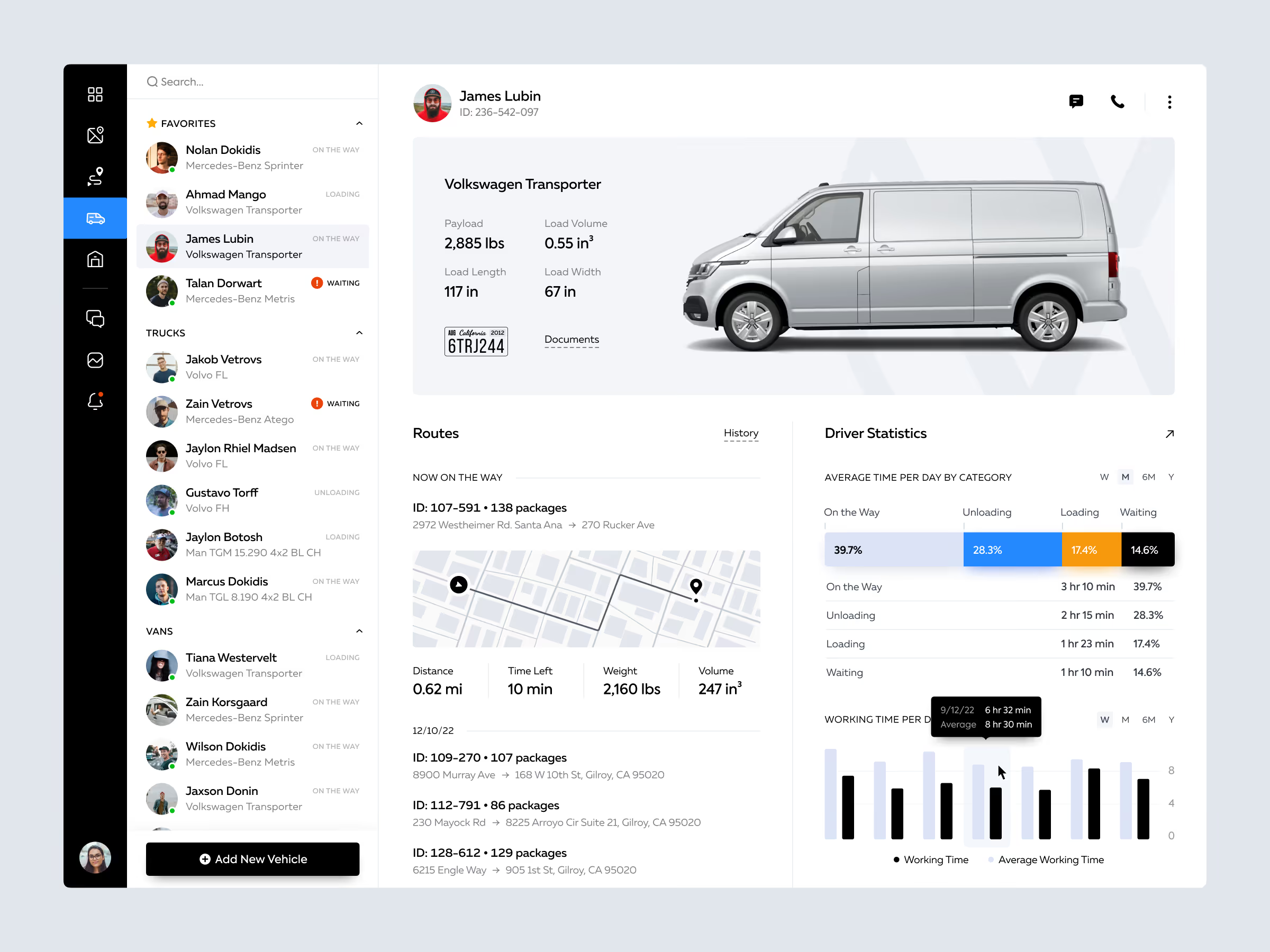
A concept helps turn that uncertainty into something visible. It gives the team a way to test the story, the flow, the interface logic, and the emotional shape of the product before development starts.
A concept is usually the right next step when:
- the problem is real, but the product form is still unclear
- the team needs to align around one direction
- stakeholders need to see the idea before approving the next step
- the product needs a stronger story before fundraising or sales
- the MVP scope feels too large or too speculative
This is where Conceptzilla's offer fits naturally. The work is not full-scale research consultancy. It is a focused path from early signals to a presentation-ready product concept.
When It Is Enough to Move Toward an MVP
Research and concept work should not become a place to hide from building.
At some point, the team needs to move from shaping the direction to testing it in a more real environment. That is where an MVP can make sense.
The team is probably ready to move toward an MVP when:
- the user problem is specific
- the product promise is easy to explain
- the core flow has been shaped and challenged
- the riskiest assumptions are clear
- the first version can be scoped without guessing wildly
This does not mean every detail is solved. It means the team has enough direction to move toward an MVP without using development to discover the basic product direction.
Final Thought
Startups do not need research theater. They need fewer expensive guesses.
The right research pass should make the next decision clearer: whether to shape a concept, narrow MVP scope, test a workflow, or stop building around an assumption that is not strong enough yet.
When research stays close to product decisions, it does not slow the team down. It gives the team a better reason to move.
If you are still shaping the product direction, explore more Insights on early-stage validation or see how Conceptzilla turns product ideas into visible outcome in Works.