

What Founders Should Validate Before Building an MVP
If the problem, value proposition, and core user flow are still fuzzy, MVP development is usually too early. A product concept helps founders validate direction before code turns uncertainty into cost.
What to Validate Before an MVP
Most founders do not fail because they start too slowly. They fail because they commit to code before they are sure what the product needs to prove.
Before an MVP, the team should be able to define the user problem, the value proposition, the core flow, the priority screens, and the decision criteria for a first release. That is where a product concept becomes useful: it turns vague product thinking into something testable before engineering starts.
An MVP comes later. It is already a build decision with real cost, real tradeoffs, and real opportunity cost. Once development begins, changing direction gets more expensive.
The real question is not whether a concept is "better" than an MVP in theory. It is whether the team has enough clarity to justify the cost of building.
The High Cost of Premature Coding
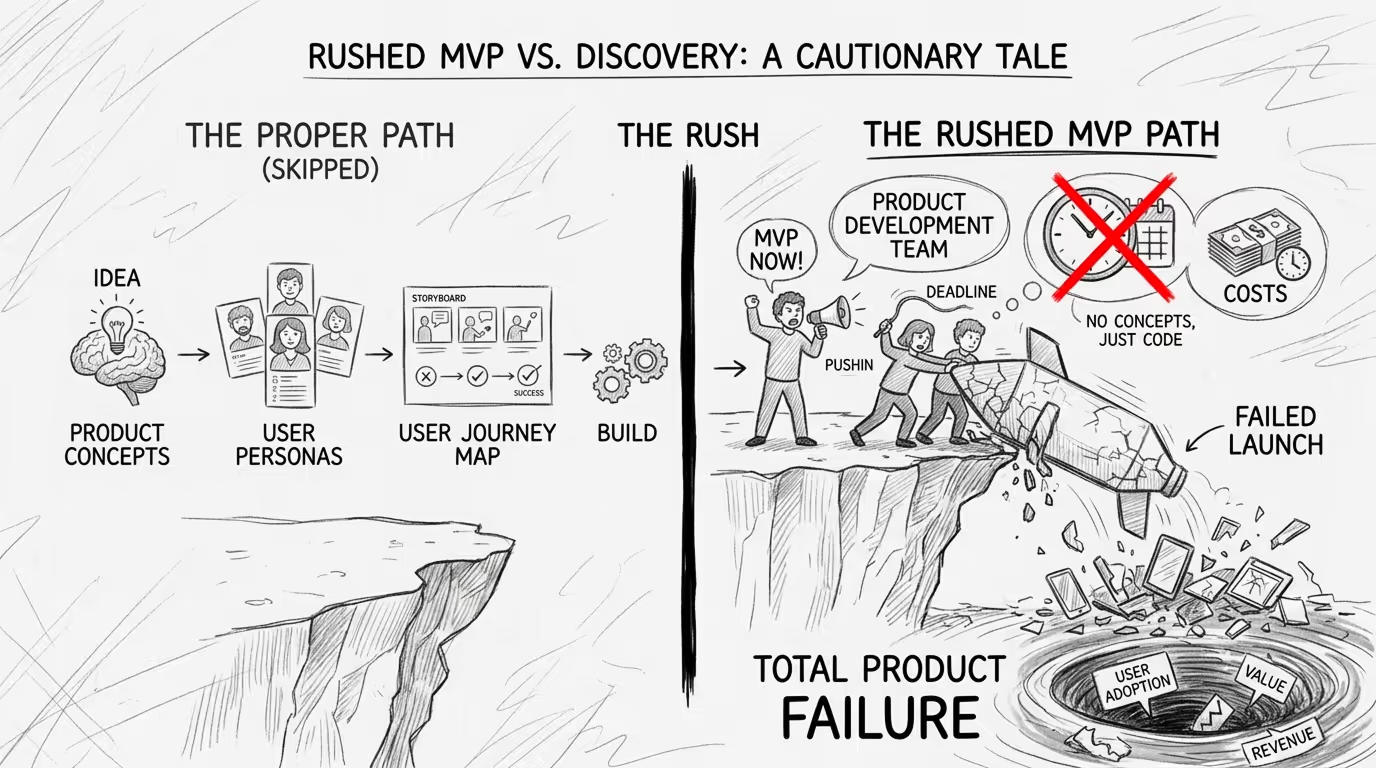
Shipping fast sounds disciplined. In practice, many startup teams use speed to avoid the harder work of figuring out what should exist in the first place.
When the direction is still fuzzy, an MVP can lock the team into the wrong assumptions too early.
Sunk Cost Fallacy in Development
Once a team has spent weeks building a feature, it becomes much harder to challenge it honestly. Even bad decisions start feeling defendable simply because they are already live, already funded, or already discussed with stakeholders.
That is the trap. Code creates emotional weight. A weak product idea can start looking more legitimate just because people have already paid for it in time and effort.
Opportunity Cost
Premature building also burns the one resource early-stage teams never have enough of: focused attention.
Every hour spent wiring infrastructure, debugging flows, or polishing features before the core direction is validated is an hour not spent talking to users, refining the offer, or testing whether the problem is worth solving at all.
The "Solution Looking for a Problem" Syndrome
Once a product exists, teams stop listening with the same honesty. They start trying to justify what has already been made.
Questions become softer. Feedback becomes easier to misread. Ambiguous reactions start getting interpreted as encouragement. By the time the team admits the premise was weak, they have already lost time to something that should have stayed fluid for longer.
Why Concept-Stage Validation Beats Premature Coding
Concept work does not slow a startup down. It changes where the speed happens.
Speed of Iteration
Changing code is rarely as fast as founders hope. Even small product changes start affecting implementation details, timelines, and team dependencies.
At concept stage, the team can still move with much less friction. Different flows, value propositions, and product directions can be explored quickly, without dragging engineering into every change.
Focus on Value, Not Features
Premature MVP work often turns founders into feature managers before they have become problem owners.
The conversation shifts toward what to build, what stack to use, what edge cases to support, and how to make the product look complete. That creates the illusion of momentum, but it can hide the more important question: why should anyone care?
Concept work forces the team to stay close to value. It keeps the discussion anchored in the user's problem, the product promise, and the logic behind the experience before the interface hardens into something more expensive.
Investor and Stakeholder Clarity
Founders often assume that investors or internal stakeholders need to see a working product before they take the idea seriously.
In reality, a half-baked MVP usually proves less than founders think. What tends to land better is a sharper story: a clear problem, a visible solution, a coherent user flow, and evidence that the team understands what it is trying to validate.
A strong concept helps people see the product before the product exists. That makes conversations cleaner, decisions faster, and next steps easier to defend.
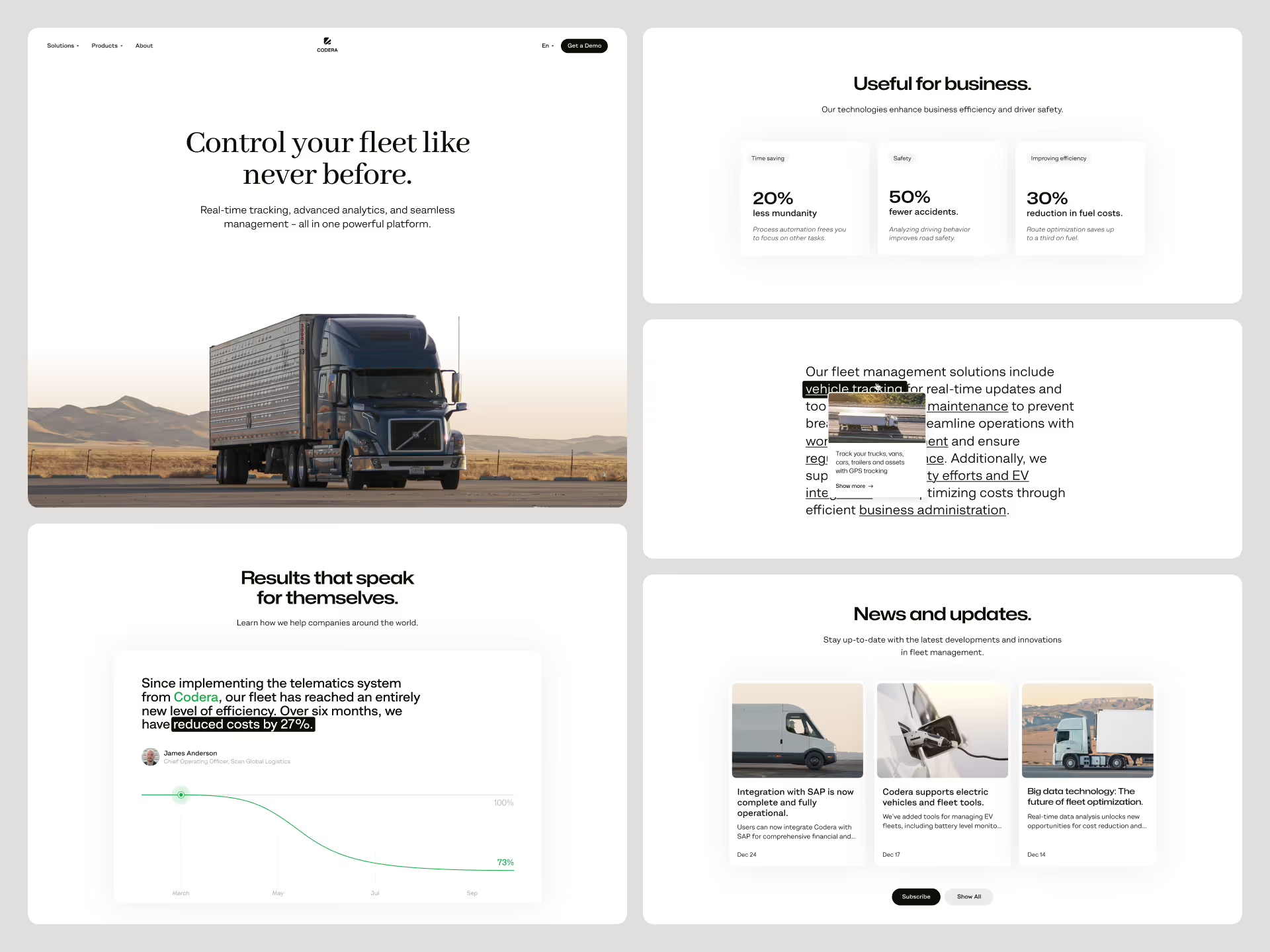
Product work by Conceptzilla
Easier Transition Into MVP
Concept work is not the opposite of MVP work. It is what makes MVP work less random.
When the concept is clear, the first version of the product can be scoped more deliberately. The team knows what matters, what can wait, and what should be tested first.
That usually leads to a smaller and more useful MVP than the version founders would have built if they had rushed in too early.
Why AI and No-Code Still Struggle With Weak Product Thinking
AI tools and no-code builders can help teams move faster. They do not solve the core problem of weak product direction.
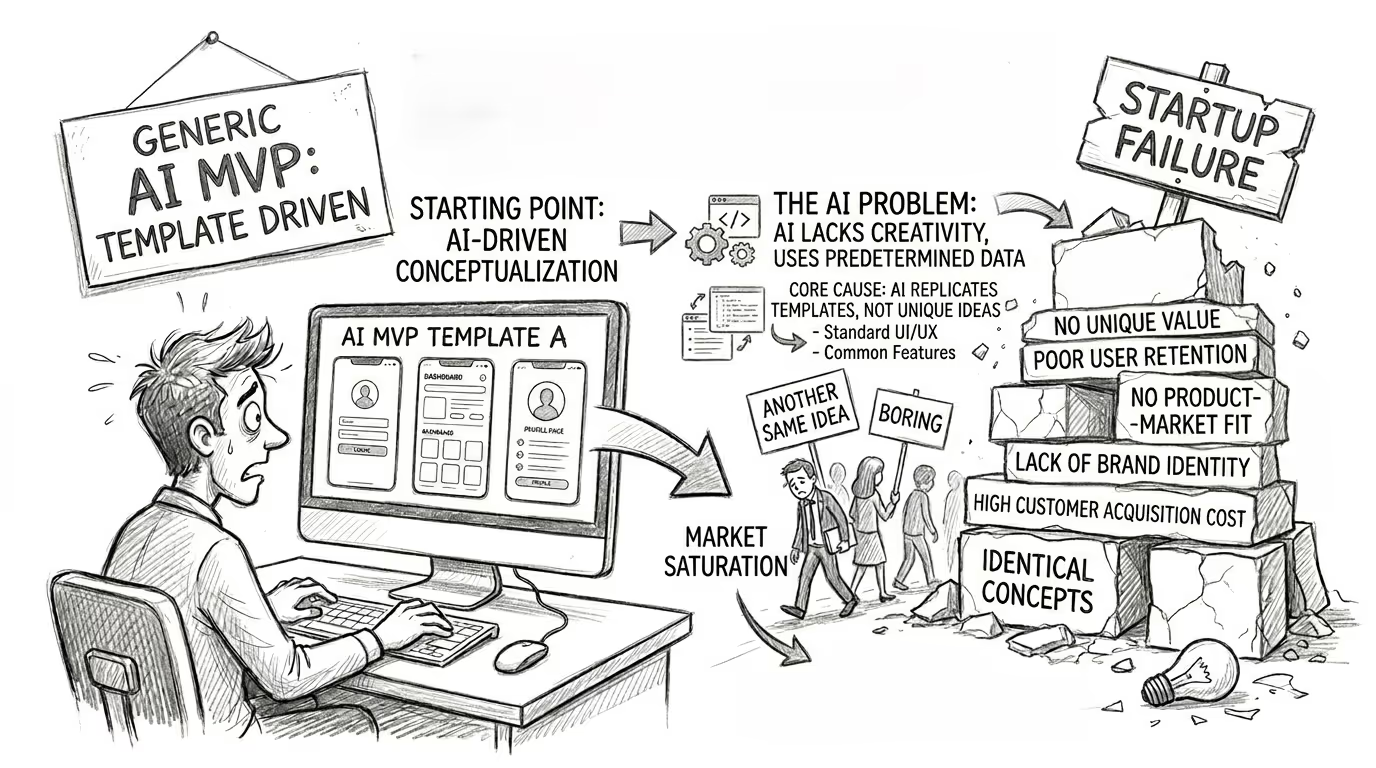
The Template Trap
These tools are at their best when the product pattern is already familiar. A standard dashboard, a simple marketplace, a generic SaaS flow, an expected onboarding path.
They struggle when the idea depends on sharper positioning, unusual product logic, or a user journey that cannot be solved by reusing common patterns.
The "Good Enough" Fallacy
This is where founders get fooled. The interface looks real enough, the product loads, and the team starts thinking that “good enough” is proof.
But a weak first version that only looks complete can still hide a confused value proposition, a clumsy user flow, or a product nobody actually needed in the first place.
Technical Debt from Day One
Even when AI-generated or no-code output helps at the start, it can create serious friction once the product needs custom logic, real integrations, or more deliberate scaling.
That means the team is not just moving fast. It may also be taking on structural debt before the core idea has earned that cost.
False Velocity
Shipping quickly is only useful when the team is moving in the right direction.
If a startup builds the wrong product faster, it has not really won anything. It has just accelerated the cost of being wrong. Concept-stage validation is slower only on the surface. In practice, it often removes entire cycles of avoidable rework.
When an MVP Actually Makes Sense
An MVP still makes sense in some situations.
- Commodity markets. If the problem is already well understood and the solution pattern is obvious, execution speed matters more than conceptual exploration.
- Technical feasibility risk. If the business case is clear but the unknown is purely engineering, a technical MVP may be the right first move.
- Validated demand. If the team already has strong proof of interest, such as qualified demand, committed conversations, or clear user pull, then building becomes a more reasonable next step.
The key is not to treat MVP as the default sign of seriousness. It is just one stage, and it works best when it follows clarity instead of replacing it.
Final thought
Founders do not lose because they move too slowly. More often, they lose because they start building before they are ready to make good product decisions.
A concept does not delay progress. It protects the team from spending money, time, and conviction on the wrong version of the product. That is often what makes the eventual MVP faster, smaller, and much more useful.
If you are still shaping your product strategy, explore more Insights on how early-stage teams can reduce uncertainty before they build.